How map juicing works
"Juicing" is the practice of investing modifiers and resources into a map to increase the quantity, rarity, and type of loot it drops. In PoE2, the loot potential of any given map is shaped by several stacking vectors. If you understand each one, you can build a farming strategy on purpose instead of by accident, and that's exactly what Juice Tools helps you measure.
Here's everything you need to know to actually move the needle. At a high level, a map's loot is shaped by a stack of vectors, each covered below:
- Waystones: the item that opens the map and carries your core loot modifiers.
- Tablets: add league mechanics and stack extra reward modifiers.
- The Atlas Passive Tree: your long-term farming identity and reward focus.
- League Mechanic Trees: per-mechanic customization layered on top of the Atlas tree.
- Masters of the Atlas (0.5): designate one of three Masters for selectable, map-wide buff talents.
- Ancient Modifiers: opportunistic bonus effects that land on Atlas nodes.
- Random Extra Content: uncontrolled bonuses (strongboxes, shrines, mechanics).
- Rarity (Item + Character): the multiplier that governs how valuable each drop is.
The Atlas
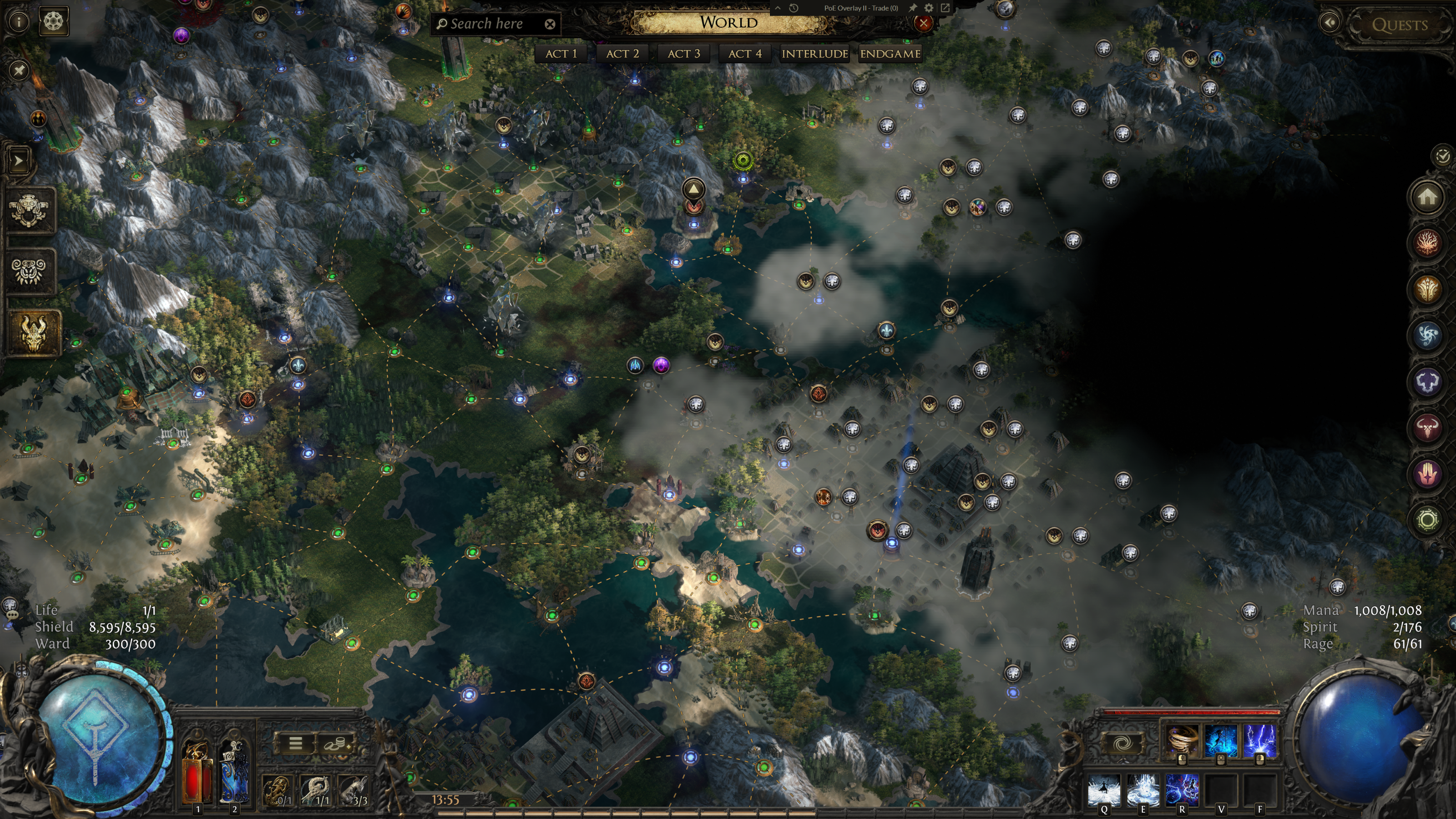
The Atlas is PoE2's endgame: a vast, interconnected web of maps you navigate node to node. It's effectively infinite, and it's filled with variety: boss encounters, maps carrying special modifiers, Citadels, and pockets of league content. Exploring the Atlas and choosing which areas/maps/biomes to run is the foundation everything else sits on.
Waystones
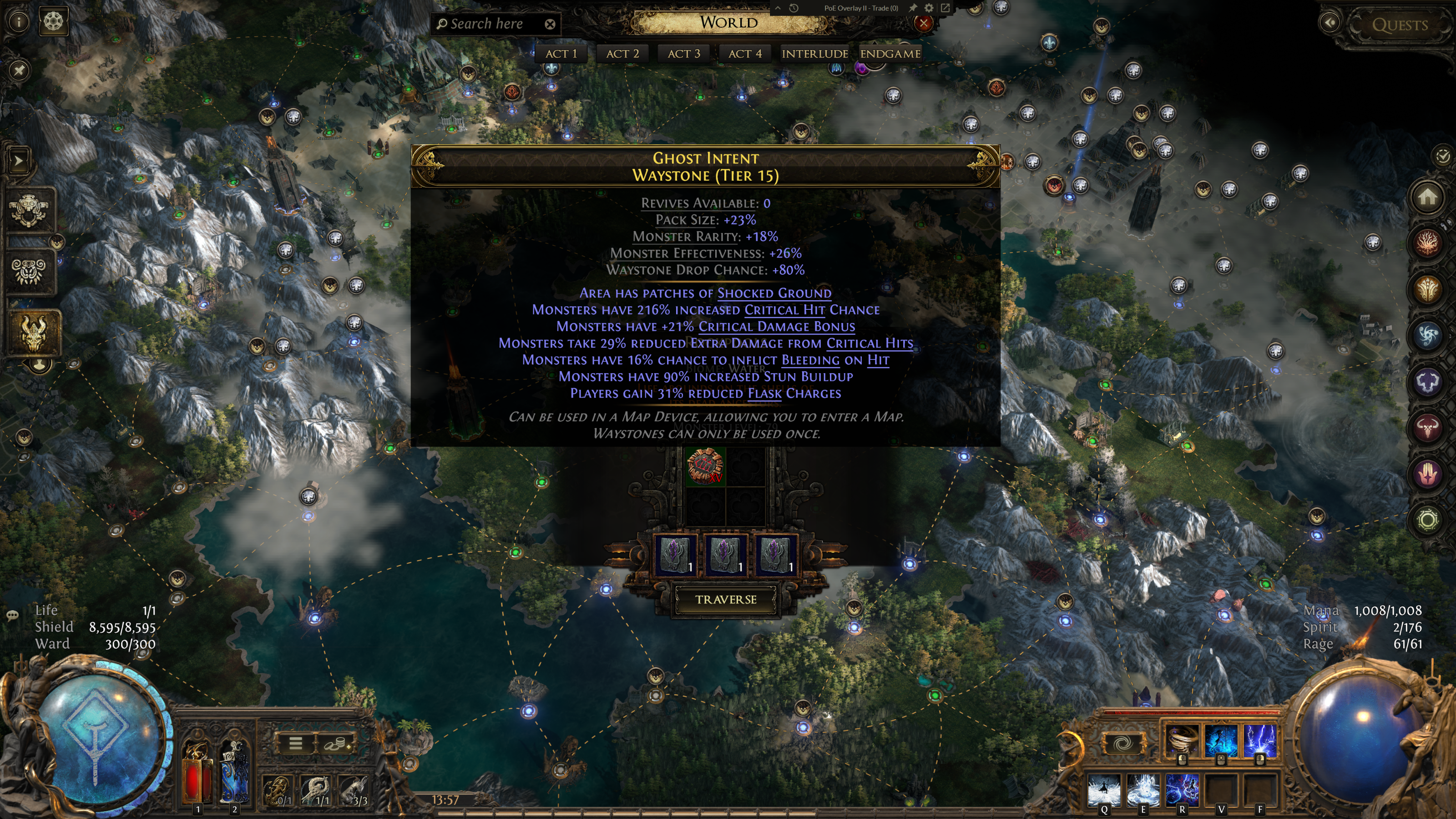
What they are: Waystones are consumable items that open a map node on the Atlas. Each has a tier (1–16), a rarity (Normal / Magic / Rare), an item level, and a set of modifiers. A Normal (white) Waystone has no modifiers by default; you can craft up to 6 onto it (higher rarity holds more), and corrupting it can push it past that ceiling for an extra modifier or two, at the cost of locking it from any further changes.
How they affect loot: a Waystone's modifiers scale your rewards directly. The heavy hitters are:
- Waystone Tier: sets the monster level in the map (level 79 by default on Tier 15s, 80 on Tier 16s); higher monster level raises the item level of what drops, meaning access to better bases and higher-tier rare items.
- Increased Pack Size: more monsters in the map; good for strats that aren't affected by rarity, like Simulacrum Splinter farming.
- Increased Rarity of Items Found: shifts drops toward higher-rarity, more valuable items; tends to yield rarer, higher-tier currencies (Divines, Chaos Orbs, etc.) rather than a larger number of drops.
- Increased Effectiveness (Monster Effectiveness): the map's main quantity/volume lever. As described in-game: for every 2% increased Effectiveness, monsters gain 2% more Toughness (they take less damage, so they're tankier), 1% more Experience granted, and drop 1% more items. In other words, it trades danger (tougher mobs) for raw drop volume and XP, and it stacks multiplicatively with Effectiveness from your Atlas tree and Tablets.
- Increased Monster Rarity: gives mobs a chance to spawn at a higher rarity (magic or rare); rarer monsters usually drop more valuable loot.
- Additional Magic / Rare Monsters: additional magic and rare monsters to your map; again, rare monsters are dropping some of the most valuable loot.
- Increased Waystone Drop Chance: increases the odds for mobs to drop additional Waystones; it may also influence other loot like Lineage Support gems (for some reason). Note: this is a sentiment commonly held in the community, but I have no hard evidence of it, at least not yet.
Implicit modifiers (the payoff): all the loot-boosting modifiers listed above are a Waystone's implicit modifiers, the reward-boosting rolls you're actually chasing (as opposed to the explicit downsides covered next).
Explicit / map modifiers (the risk): the explicit modifiers rolled onto a Waystone are usually downsides that raise a map's difficulty and danger: things like reduced cooldown recovery rate or negative elemental resistance on the player. They matter for two reasons:
- They set the risk level of the map; nastier explicit mods mean deadlier packs and tighter play.
- They're directly tied to the implicits: the explicit mods you roll are what determine which loot-boosting implicits show up on the Waystone. Taking on more danger is how you unlock more juice.
Because the roll is random, players often fish for the modifiers they want. Apart from crafting new waystones, a common approach is using chaotic omens from Ritual, e.g., Omen of Chaotic Rarity or Omen of Chaotic Quantity, to reroll a Waystone's mods and chase a specific outcome (more rarity, more quantity, and so on). These omens can be combined to more deterministically craft the outcome of a waystone; you effectively block the ability for certain mods to roll to ensure you get the mods you want.

Tablets (Precursor Tablets)
What they do: Tablets add league mechanics and extra rewards to your maps. Each Tablet has 10 uses by default. The number of Tablet slots a map has scales with how many modifiers are on its Waystone: 0–2 modifiers gives 1 slot, 3–5 gives 2 slots, and 6+ unlocks all 3; a City biome then adds a 4th slot. They're how you decide which mechanics show up in your farming.
City biomes & Citadels: City biomes always surround Citadels (endgame strongholds; details below) and they're what unlock the extra (4th) Tablet slot. A Citadel itself requires a Tier 15+ Waystone to enter and features a pinnacle variant of an Act boss. Each Citadel is themed, and the theme tells you which boss you'll face: Copper → Jamanra, Stone → Doryani, Iron → Count Geonor.
How their mods matter: beyond adding a mechanic, Tablet modifiers heavily shape how rewarding each map is:
- Commonly sought-after prefixes: increased Rarity, increased Monster Rarity/Rare Monsters, increased Pack Size, and Effectiveness.
- These mods are big opportunities to stack the effects of the implicit mods on your waystones.
- League-specific mods: these change your strategy meaningfully, and you'll want to be mindful of what mods you're running for any given strategy.
- For example, let's say you want to farm Simulacrum Splinters, you'll want to run modifiers that affect how often splinters drop, and how many drop in each stack.
Example Delirium / Simulacrum map in Juice Tools
Hover over a waystone or tablet to view its modifiers. Expand the Modifiers dropdown to view the aggregate values.
Loadout
Drops
Per-drop values use current market rates (not first-save).
Read-only example from a real Juice Tools session. Collapse or expand like Session History — start tracking on the home page.
- For prefixes, we are mostly targeting mods like "monster rarity", "increased rare monsters," and "increased pack size." This is because simulacrum splinters are unaffected by item rarity, but greatly influenced by the rarity of each mob. Rarer monsters = higher stacks of simulacrum splinters.
- For suffixes, we are chasing mods that will increase both our chances for splinters to drop, as well as the stack size of splinters. Modifiers like "increased size of simulacrum splinters," or "increased number of fracturing mirrors," give us much better chances to spawn big stacks of splinters throughout the map.
- In this example, fracturing mirrors spawn delirium mobs when you get close to them. When mobs spawn out of a mirror, they have a chance to be normal, magic, rare, or unique. If we boost monster rarity or rare monsters, we'll likely see higher rarity monsters come out of each mirror, which drop the largest stacks of splinters. Additionally, we can affect the quantity of fracturing mirrors that appear on the map, giving us even more chances to spawn rare monsters that drop big simulacrum splinter stacks.
Simply put, tablet modifiers are a massive vector for affecting the quality of your loot in each map. Try and combine synergistic modifiers to increase your chances to get the best loot for whatever strategy you are running. The profile browser is a great place to start if you want to see setups other Juice Tools users are using.
The Atlas Passive Tree
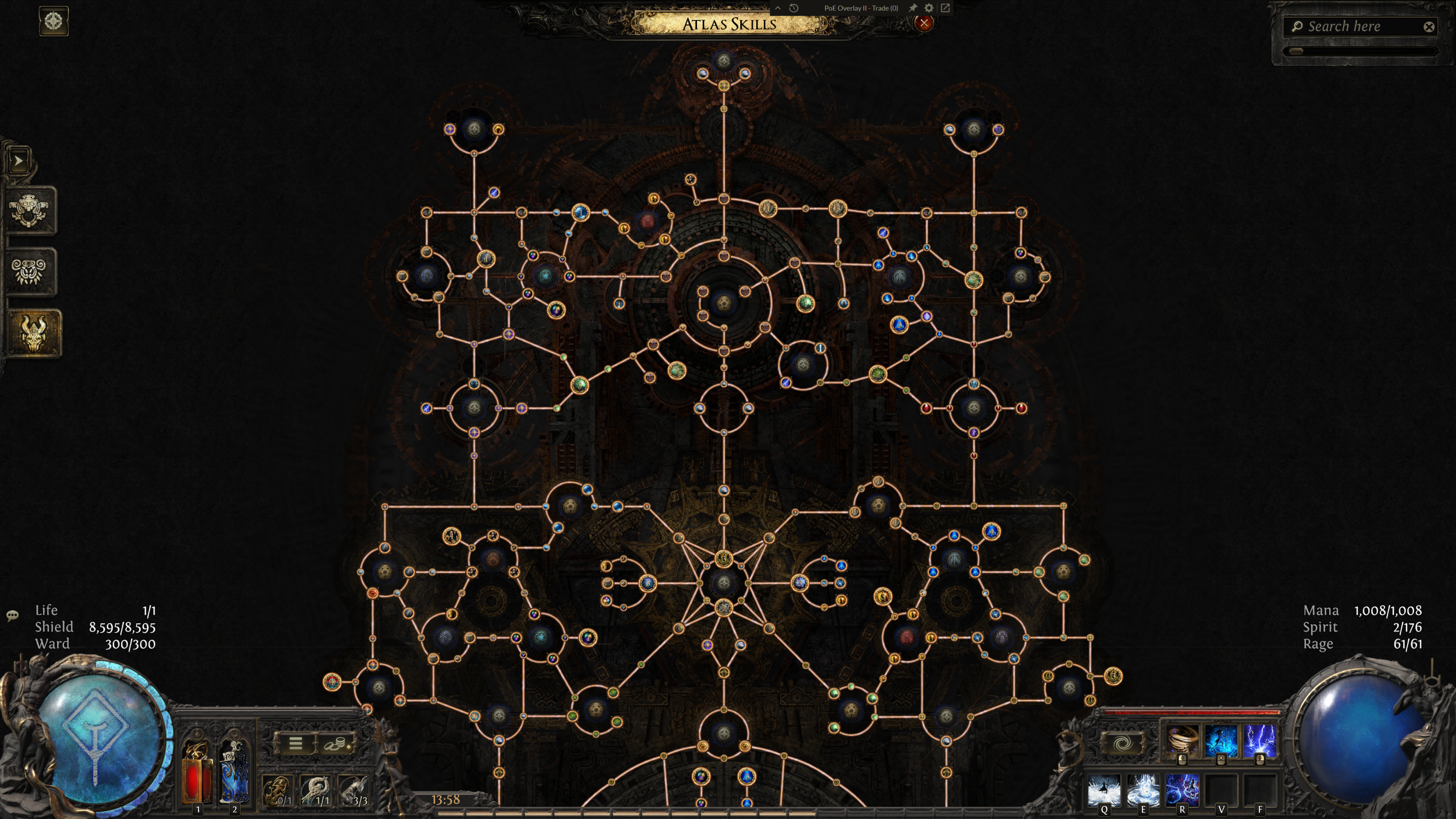
As you fill out your Atlas tree, key switchable nodes can have a big impact on loot. For example, if you're running Cities, certain nodes add a secondary biome effect that can increase things like increased rare monsters and item rarity. The tree is where you commit to a farming identity: leaning into a mechanic, a map type, or a reward category.
Atlas tree points are earned by progressing the fortress. Defeating the Arbiter of Divinity will allow you to automatically "complete" a region of the fortress which typically results in around 40 atlas points to allocate. Unlike the character passive tree, players will be able to allocate every node on the tree; the decisions come in what option you take on the keystone nodes.
League Mechanic Tree
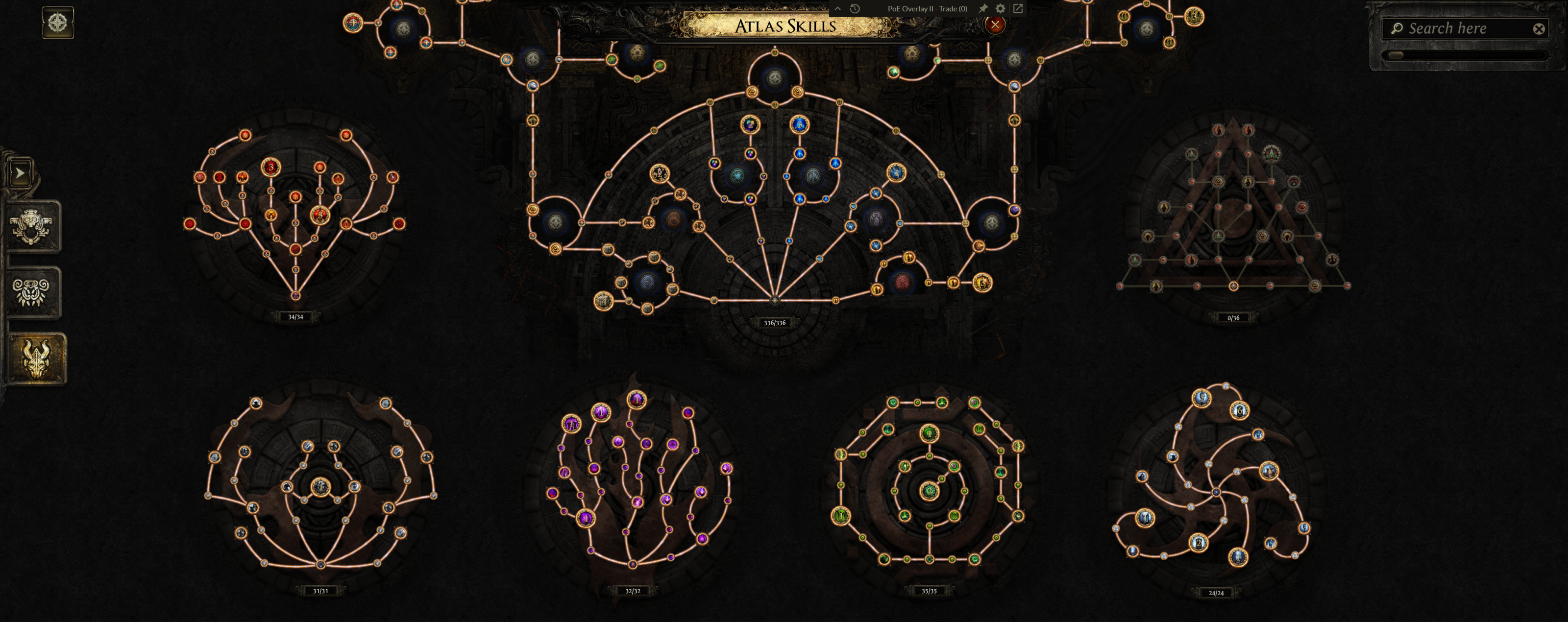
Alongside the Atlas Tree, you'll have individual trees for each current League mechanic. Similarly, you'll fill all of these points out as you progress the endgame and run the required league content. You'll also have notable nodes with multi-choice selection so you can further customize your experience with each league mechanic.
Masters of the Atlas
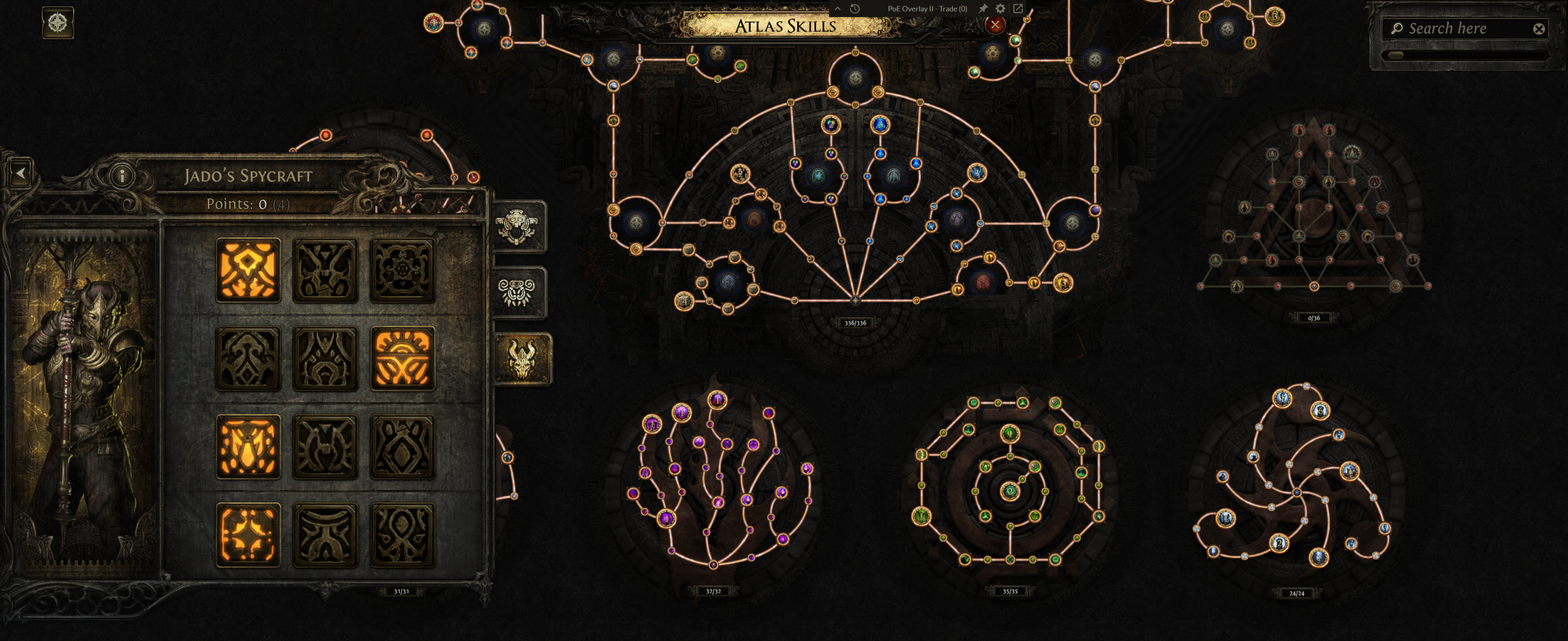
As you progress the Atlas, you'll encounter three Masters: Jado, Hilda, and Doryani, each gated behind a short series of quests. Think of them as an Atlas ascendancy; once unlocked, you designate a single active Master whose talents apply map-wide buffs on top of everything else.
Each Master has 12 talents, and once fully unlocked you can activate 4 of them at a time. Only one Master can be active per map, but you can freely swap Masters and re-pick talents from the map device before you launch, so you can tailor your buffs to whatever you're farming. The talents range from flat reward boosts to build-around effects, e.g., "randomly gain between 0 and 40% increased effect of Explicit Modifiers on Tablets."
Because a Master is chosen per map and stacks with your Waystone, Tablets, and Atlas tree, it's another meaningful lever worth capturing when you compare setups. Record the active Master and talents on the map loadout — Juice Tools remembers the last pick for the next map, like tablets and waystones.
Ancient Modifiers
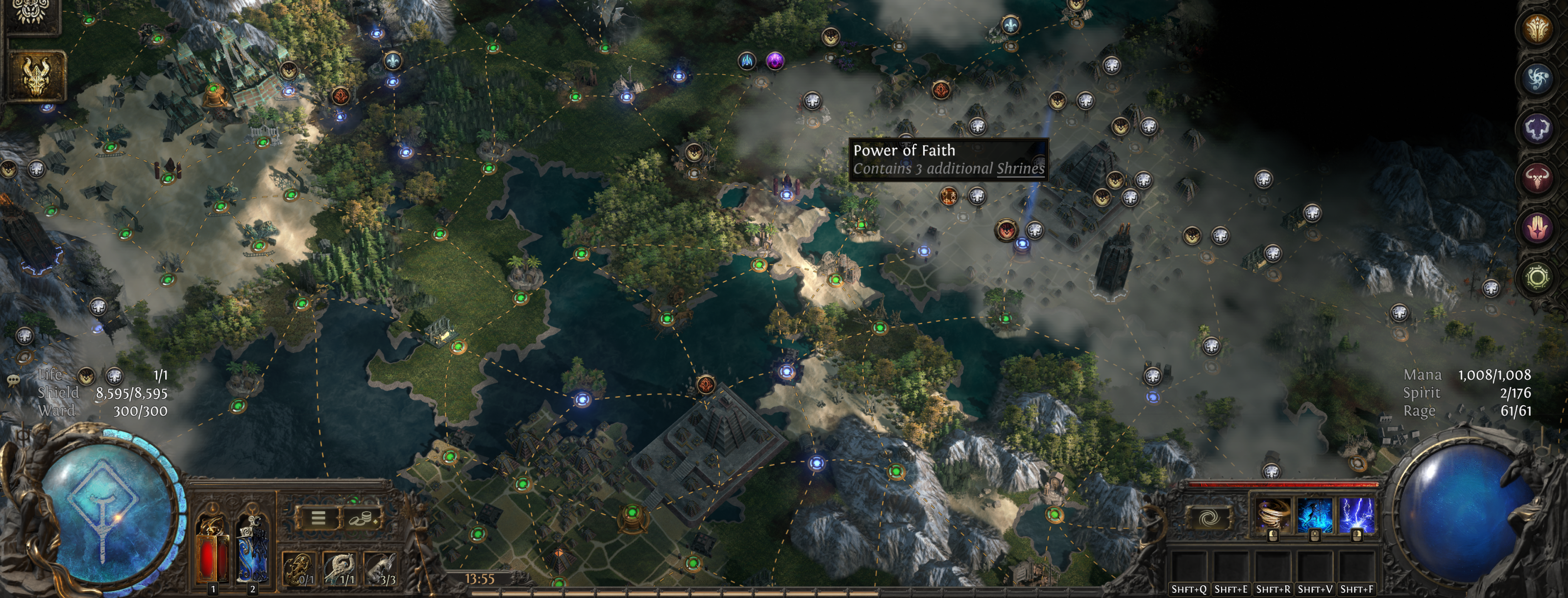
Ancient Modifiers are special modifiers that randomly appear on Atlas nodes. They have standout effects: for example, boosting the number of Azmeri spirits or guaranteeing Rogue Exiles. They're opportunistic juice: when one lands on a node you were going to run anyway, it's free value.

Random Extra Content
Every time you load a map, there's a chance to generate random extra content on top of whatever you planned. This can be strongboxes, shrines, or even full league mechanics like Ritual or Breach. It's variance you don't directly control, but it's a real part of a map's loot potential, and something worth tracking so you understand your averages. Juice Tools does its best to account for this with automated content tagging based on recorded drops; however, some drops are difficult to attribute and will require manual tagging.
How Rarity Works
There are two kinds of "rarity" to keep straight:
- Item Rarity: the modifier (from Waystones, Tablets, and the tree) that improves the quality of drops, pushing them toward rarer, more valuable outcomes (more chaos orbs instead of exalts, better chance for Divines, etc.). It does not add drop quantity; Effectiveness is the lever for volume.
- Character Rarity: the rarity your character contributes, which Juice Tools captures per profile so your recorded runs reflect your real setup.
- These two values are multiplicative. The rough formula is ((Waystone Rarity + Tablet Rarity) × Character Rarity): your Waystone and Tablet rarity add together, and that total is then multiplied by your character/gear rarity. The Atlas tree stacks additional rarity on top of this.
Juice Tools snapshots your character's rarity at the start of each session and combines it with your Waystone and Tablet's Item Rarity so your analytics give you deeper insight into how rarity is affecting your sessions.
Wrapping Up
It's definitely a lot to take in. PoE2's endgame stacks vector on top of vector: Waystones, Tablets, the Atlas tree, Masters, league mechanics, rarity, and a healthy dose of RNG over all of it. It's genuinely hard to tell which of those choices are earning you loot and which just feel productive.
That's exactly why I'm building Juice Tools: to demystify map outcomes. The goal is to turn all that complexity into clear, personal data so you can see what your juicing is actually worth and make each run better than the last. Paste a Waystone, run your maps, and let the numbers tell you what's working.
Happy farming!